Zohran Mamdani Elected NYC Mayor: Democratic Socialist's Historic Win Ushers in New Era for New York in 2025
11/5/20254 min read
Zohran Mamdani at the Resist Fascism Rally in Bryant Park on October 27, 2024


City Hall's New Horizon: Zohran Mamdani's Path to Becoming NYC's Trailblazing Mayor
As the confetti settled over Brooklyn's Paramount Theatre on the night of November 4, 2025, New York City etched a fresh chapter into its storied political ledger. Zohran Mamdani, a 34-year-old state assemblyman from Queens, claimed victory as the 111th mayor, shattering barriers as the city's first Muslim leader and its youngest in over a century. With more than 50% of the vote—surpassing a million ballots for the first time since 1969—Mamdani outpaced independent challenger Andrew Cuomo, who garnered about 41%, and Republican Curtis Sliwa, who hovered around 7%. This wasn't just a local upset; it capped a banner evening for Democrats, with gubernatorial flips in Virginia and New Jersey, plus California's redistricting nod adding congressional muscle to the party.
From a centrist lens, Mamdani's ascent feels like a microcosm of America's evolving political mosaic—where idealism meets pragmatism in the pressure cooker of urban governance. He's no career insider; born in Uganda to Indian parents, Mamdani arrived in NYC at age seven, naturalised in 2018, and cut his teeth in housing advocacy before dipping into rap and then Albany politics. His campaign, launched last fall as an underdog bid, morphed into a juggernaut fueled by small donors, viral social media clips, and a volunteer army that doorknocked every borough. At its core was a promise to tackle the city's grinding affordability crunch: freezing rents on stabilised units, ramping up public housing builds, hiking the minimum wage to $30 an hour, axing bus fares, and soaking the ultra-wealthy with targeted taxes. It's a bold playbook that echoes progressive icons like Bernie Sanders and Alexandria Ocasio-Cortez, who stumped alongside him, but it's tempered by nods to everyday New Yorkers weary of skyrocketing costs and uneven recovery.
The road to City Hall was anything but smooth. Mamdani's June primary drubbing of Cuomo—by a 13-point margin—sent shockwaves through the establishment, rallying a rainbow coalition of young voters, immigrants, and working-class families. Yet the general election devolved into a slugfest. Cuomo, the 67-year-old ex-governor eyeing redemption after his 2021 resignation amid harassment allegations (which he denies), pivoted to an independent run, hammering Mamdani's youth and "inexperience" as liabilities in a metropolis still scarred by pandemic fallout and crime spikes. Sliwa, the Guardian Angels founder, threw in cultural barbs, but polls never budged from Mamdani's double-digit lead.
Zohran K. Mamdani's 2025 NYC Mayoral Campaign Logo
Debates in October turned fiery, with the trio clashing over everything from policing reforms to housing shortages and transit woes. Global flashpoints crept in too—Israel's Gaza operations drew pointed critiques from Mamdani, who champions Palestinian rights, straining ties with some Jewish organisations while inviting a torrent of Islamophobic smears online and from conservative corners. Figures like GOP Rep. Elise Stefanik branded him a "jihadist," and a radio quip from a host (laughed off by Cuomo) speculated Mamdani might "cheer" another 9/11-style attack—a jab the winner decried as "racist" and "disgusting." Even a pro-Cuomo Super PAC stirred controversy with an ad that allegedly doctored Mamdani's image to amplify his beard, sparking accusations of bigotry.
Looming larger was the national spotlight, amplified by Donald Trump's eleventh-hour Truth Social endorsement of Cuomo. Labelling Mamdani a "radical communist," Trump dangled threats of withholding federal funds from a Mamdani-led NYC, framing the race as a proxy war against "Trump's worst nightmare." Elon Musk echoed the call for Cuomo, while hedge fund titan Bill Ackman funnelled over $1 million into anti-Mamdani PACs. Post-victory, Ackman extended an olive branch via social media: "Now you have a big responsibility. If I can help NYC, just let me know." It's a pragmatic pivot that underscores the city's economic stakes—Wall Street's health intertwined with progressive policies that could either invigorate or unsettle investors.
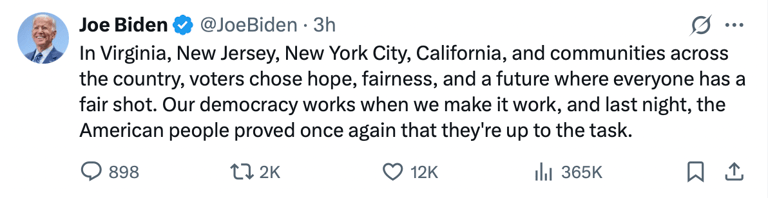
Endorsements told their own tale. Progressives like Sanders, AOC, Rep. Jerry Nadler, and AG Letitia James lined up early. Gov. Kathy Hochul and House Minority Leader Hakeem Jeffries came aboard later, bridging party divides despite policy rifts. Notably absent: Sens. Chuck Schumer and Kirsten Gillibrand, whose silence highlighted Democratic fissures. On the flip side, former President Joe Biden hailed the night as a triumph for "hope and fairness," tweeting praise for wins in NYC, Virginia (where Rep. Abigail Spanberger became the first female governor, besting Lt. Gov. Winsome Earle-Sears), New Jersey (Rep. Mikie Sherrill trouncing Trump-backed Jack Ciattarelli), and California's Prop 50, which greenlit Dem-friendly maps yielding five new House seats.
What does a Mamdani mayoralty mean for the five boroughs? Optimists see a revitalised focus on equity—free buses easing commutes for low-wage workers, wage hikes bolstering families, and housing pushes curbing homelessness. Sceptics warn of fiscal fallout: Higher taxes on the rich might spur an exodus, while ambitious spending risks ballooning budgets in a post-COVID economy. Centrally, it's a test of whether socialist-tinged ideas can scale in America's capitalist heart. Mamdani's immigrant roots add layers—Trump's citizenship revocation musings (swiftly rebuked) spotlighted vulnerabilities for naturalised citizens, yet his win signals resilience.
As Mamdani posted a cheeky X video of subway doors parting to a "City Hall" announcement, the message was clear: Change is arriving. Outgoing Mayor Eric Adams, who bowed out in September after an independent bid fizzled, leaves a mixed legacy of crime reductions offset by scandals. For New Yorkers—from Bronx bodega owners to Manhattan moguls—this election isn't about ideology alone; it's about forging a livable city amid national headwinds. In an era of polarisation, Mamdani's coalition-building offers a glimmer of unity, proving that even in the concrete jungle, fresh voices can rise above the noise.
Connect
Connecting You to Global News
Explore
Support Orbital News
© Orbital News 2025. All rights reserved.