Trump Welcomes Saudi Crown Prince Mohammed bin Salman to the White House
11/20/20255 min read
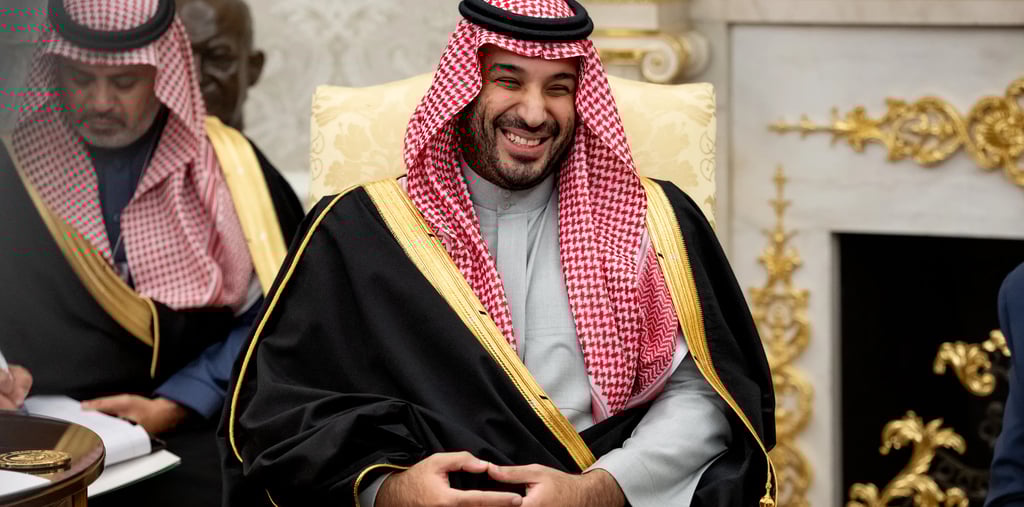
Crown Prince Mohammed bin Salman of Saudi Arabia in the Oval Office November 2025 Credit: White House / Whitehouse.gov
Trump Welcomes Saudi Crown Prince Mohammed bin Salman to the White House in a Visit Packed with Deals, Diplomacy and Controversy
US President Donald Trump hosted Saudi Crown Prince Mohammed bin Salman on Tuesday in a high-profile meeting that signalled a dramatic new chapter in one of Washington’s most complicated alliances. The meeting marked the crown prince’s first return to the White House since the 2018 killing of Jamal Khashoggi, a moment that once plunged the US-Saudi relationship into crisis and fueled intense bipartisan anger on Capitol Hill.
Seven years later, the mood in Washington is very different. Trump’s public embrace of the crown prince reflected a geopolitical calculation that the young ruler’s influence in the Middle East would shape the region for decades to come. The president treated the visit as an opportunity to reset relations around shared security goals, economic interdependence and a growing catalogue of strategic agreements. The crown prince’s critics view the visit as part of a wider rehabilitation campaign in Western capitals. His supporters see it as a recognition of Saudi Arabia’s rising power.
While the two leaders avoided revisiting the Khashoggi controversy in public, the subject hovered over the meeting as reporters pressed the president about the murder and the US intelligence assessment that concluded the crown prince likely approved the operation. Trump snapped when one reporter asked whether he believed the crown prince should take responsibility. The president responded by accusing the journalist of trying to embarrass the Saudi leader and insisted that the visit was about strengthening a crucial partnership.
The White House had prepared a carefully choreographed schedule that blended policy announcements with symbolic gestures. The day began with a formal arrival in the West Wing, followed by a lengthy Oval Office discussion that included national security officials, senior advisers and members of the Saudi delegation. Trump and the crown prince later unveiled a slate of deals valued in the billions, including one that would clear the way for Saudi Arabia to purchase advanced F-35 fighter jets. The two men then appeared before reporters, where the president offered the crown prince high praise.
A Partnership Once in Freefall Now Rebuilt
Saudi Arabia’s position in Washington has fluctuated over the past decade. The Khashoggi murder triggered threats from Congress to curb arms sales. The Biden administration opened its term with a vow to make the crown prince a pariah. Senior US officials reevaluated intelligence cooperation, and human rights concerns shaped public statements from the White House.
That climate has changed significantly. Trump’s return to office created an opening for Riyadh to rebuild the relationship on more favourable terms. The crown prince arrived with a list of goals he has been pursuing for years. These include advanced defence hardware, a long-term strategic defence arrangement with Washington, investment access in the American tech sector and a more influential voice in the region’s security architecture.
Saudi Arabia has pledged nearly a trillion dollars in future US investments tied to artificial intelligence, semiconductor manufacturing, infrastructure partnerships and energy diversification. The crown prince’s Vision 2030 program, which aims to expand the Saudi economy beyond oil, requires consistent access to American technology, American capital and American political goodwill. Trump’s willingness to deepen the partnership, while sidestepping the most politically explosive points of contention, created a favourable environment for the deals announced this week.
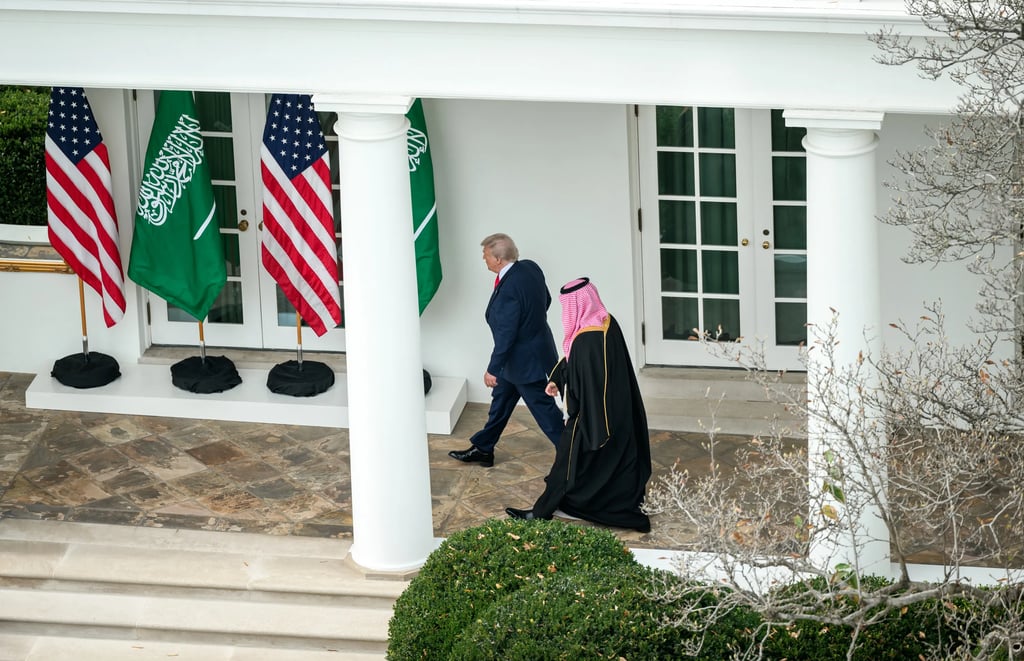
President Trump and Crown Prince Mohammed bin Salman at the White House, November 2025 Credit: White House / whitehouse.gov
The Deals That Redefine the US-Saudi Relationship
The meeting produced a long list of agreements that reshape both the diplomatic and military relationship between the two countries. The United States has designated Saudi Arabia a Major Non-NATO Ally, an important classification that provides access to military technologies and security assistance. The planned sale of F-35 jets to the kingdom marks a major shift in regional military balance, although US officials stressed that Israel’s qualitative military advantage remains protected.
The two countries also signed a Strategic Defence Agreement, launched a partnership on artificial intelligence, expanded cooperation on critical minerals and opened the door for new collaboration in nuclear energy development. The AI agreement includes permission to sell advanced chips to Saudi Arabia, a move the kingdom sees as essential for building a global technology hub.
Trump also agreed to support diplomatic efforts led by Saudi Arabia to end the civil war in Sudan. American officials said the crown prince has become a key negotiator in that conflict and that US backing could accelerate a ceasefire.
In the Oval Office, the crown prince described the agreements as a milestone. “Today is a very important time in our history,” he said. The president echoed the sentiment and characterised the partnership as a stabilising force in a region experiencing rising tensions.
What Saudi Arabia Still Wants
Despite the long list of agreements, two major Saudi goals remain unresolved. Riyadh wants explicit US approval to enrich uranium on Saudi soil for future nuclear power plants. Although Saudi Arabia says it wants the capability for peaceful energy programs, the United States has historically been cautious about allowing enrichment in a region with long-standing security risks.
Energy Secretary Chris Wright told Fox News that the nuclear cooperation deal does not allow domestic enrichment at this stage. However, Saudi officials have made it clear that they view enrichment as a sovereign right, especially given the size of the country’s uranium deposits.
Saudi Arabia also seeks a deeper, legally binding defence guarantee, similar to the commitment recently extended to Qatar. Qatar hosts the largest American airbase in the Middle East and, in 2022, became a Major Non-NATO Ally. Earlier this year, Washington issued an executive order declaring that any armed attack on Qatar would be treated as a threat to the security of the United States itself. Riyadh wants a defence pledge at least as strong.
American officials say discussions on a more formal guarantee will continue, but caution that such an agreement may face resistance in Congress.
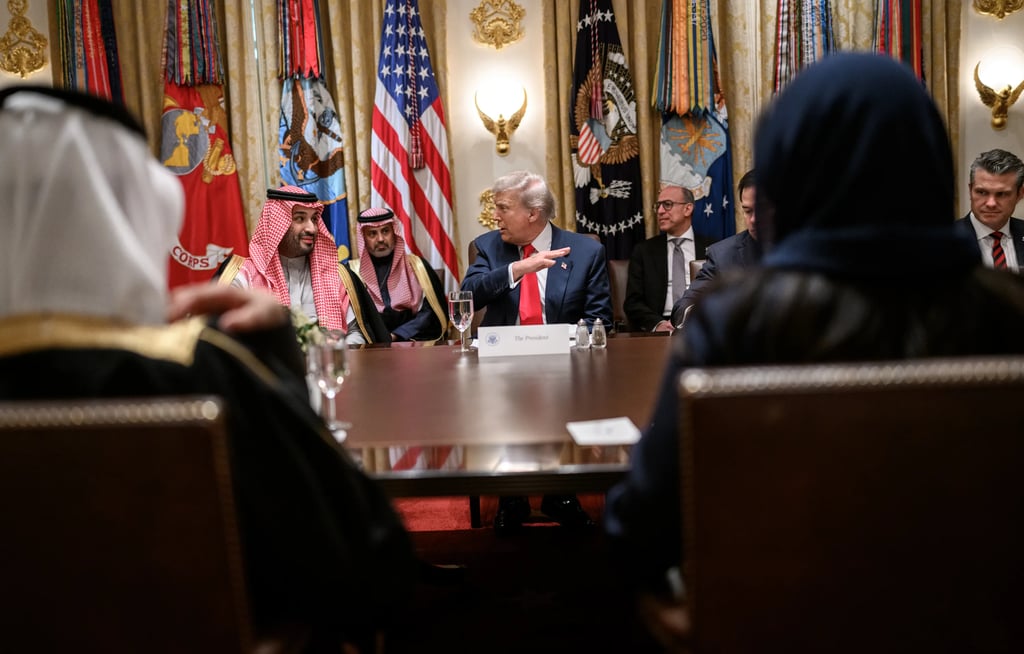
President Trump and Crown Prince Mohammed bin Salman in the Cabinet Room, November 2025 Credit: White House / whitehouse.gov
The Symbolism of the Visit
The visit concluded with an evening event at the White House hosted by First Lady Melania Trump. The gathering, which included business leaders, diplomats and policymakers, signalled the administration’s intent to treat the crown prince as a fully rehabilitated figure in American political circles. For Saudi Arabia, the event served as a demonstration that the crown prince is again welcome at the highest levels of the US government.
Trump’s approach has drawn both praise and criticism. Supporters argue that the United States cannot afford to alienate a powerful partner at a time of global uncertainty. Critics warn that the administration is rewarding a leader whose past actions sparked some of the most intense diplomatic backlash in years.
The long-term implications of the visit are still unfolding, but the message from the White House is clear. The administration sees Saudi Arabia as a vital partner in shaping the future of the Middle East. The crown prince sees the United States as a central pillar of his effort to transform the Saudi economy and expand the kingdom’s global influence.
Both sides now move forward with a relationship rebuilt on shared interests, calculated risks and a willingness to set aside the tensions of the past.
Reported by Orbital News
Image credit: whitehouse.gov
Connect
Connecting You to Global News
Explore
Support Orbital News
© Orbital News 2025. All rights reserved.